
We called it Buckwheat Row, but when they finally put up official signs during the 911 startup, they called it Buckwheat Road. "Road" is likely the proper designation, but it is not much of a road, a narrow, muddy, gravel, potholed track joining the highway at Groveton to the path that leads into the Huckleberry Marsh only two miles away.
The question is how did it get its name? Why "buckwheat"?
The area is called the Groveton Bog, which suggests rather low, wet land imperfect for farming. Indeed it is stony and light where it is not muddy and wet. It is poor land that the Scots who came here in the 1800's looked on favourably. How did the pioneers know? It was covered by forest when they first saw it.
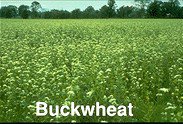
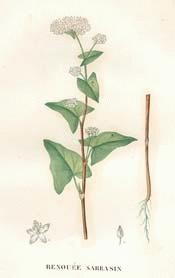
Buckwheat grows just about anywhere, so it would flourish around the Groveton area. It came originally from Asia, then to Europe and at last to Canada. It is an edible grain, both for human and animal, and it has other purposes.
The whole grain can be fed to hens, and it can be cracked to be mixed with other grain for a balanced poultry food.
Buckwheat has a nutty flavour when cooked, kasha being the dried and toasted buckwheat groats. Kasha is used in midEastern dishes, very delicious and easy to make. Even as I write this, Judy is preparing kasha for supper.
Buckwheat is also milled to make the flour especially used to make pancakes and crepes because of the texture and taste, in particular, Galettes de Sarrasin which are basic French crepes made with buckwheat flour. One time we were in France, we stayed overnight in a small city on the Loire and, after finding a hotel room near the river, we strolled around to find a restaurant. We sat down on the patio of La Galette, a restaurant specializing in crepes but featuring Galettes de Sarrasin. They were delicious. You can Google the name for a recipe.
Do we need other purposes for buckwheat? They exist. The buckwheat flower is large and much favoured by bees, so that buckwheat honey can be seen on store shelves. It is dark with a strong taste.
Growing buckwheat has another unusual use that I recall from those farming days long ago. It grows very quickly and is very thick and green. It beats weeds! After growing a crop of oats on a field, sometimes a crop of buckwheat was grown to kill off the weeds, and then at fall plowing time the thick green plants were ploughed under to provide humus to the soil making it richer for a planting the next year. It was similar to letting the land lie fallow but with a super bonus. It was a natural, organic way of getting rid of the weeds and enriching the light soil.
So, why not call it Buckwheat Row?


No comments:
Post a Comment